
Unreal magic Realism?

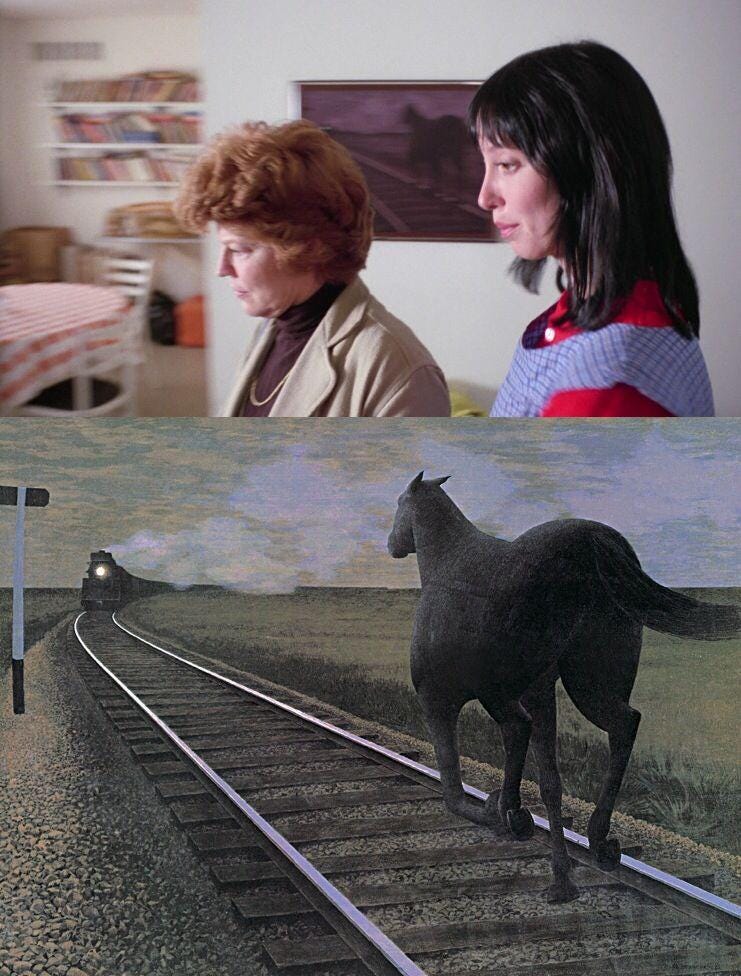
You have probably seen this painting somewhere and wondered what it is about. Quite intriguing not only in the content but also in the style. It is by one of my favorite modern painters, Alex Colville
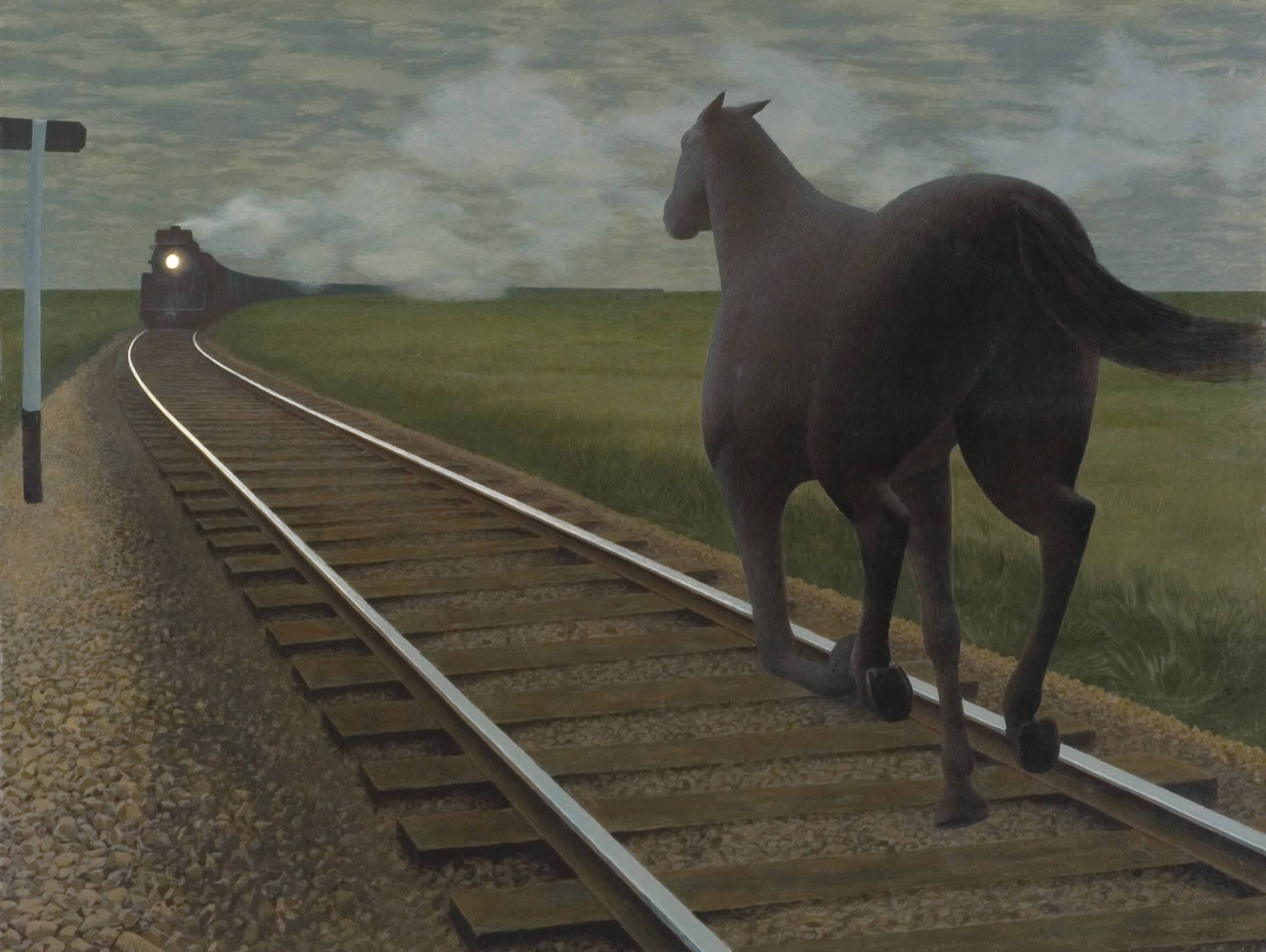
A very evocative image, this painting was inspired by this poem
Against a regiment I oppose a brain
And a dark horse against an armored train.
The triangular composition places the horse as the protagonist charging against the train, its motion line naturally following the tracks. The train is close enough but distant at the same time, and we don’t perceive any motion, as if it is just part of the horizon (enforced by its light resembling a moon).
The painting does not evoke any feeling of speed or violence, but quite the opposite it manages to transmit a sense of calm and peace, even weightlessness.
While serving for the Canadian army in WW2, he started his artistic career as a "war painter"
We see a strong influence of impressionism, painting in relatively muted colors to represent the atmosphere of war
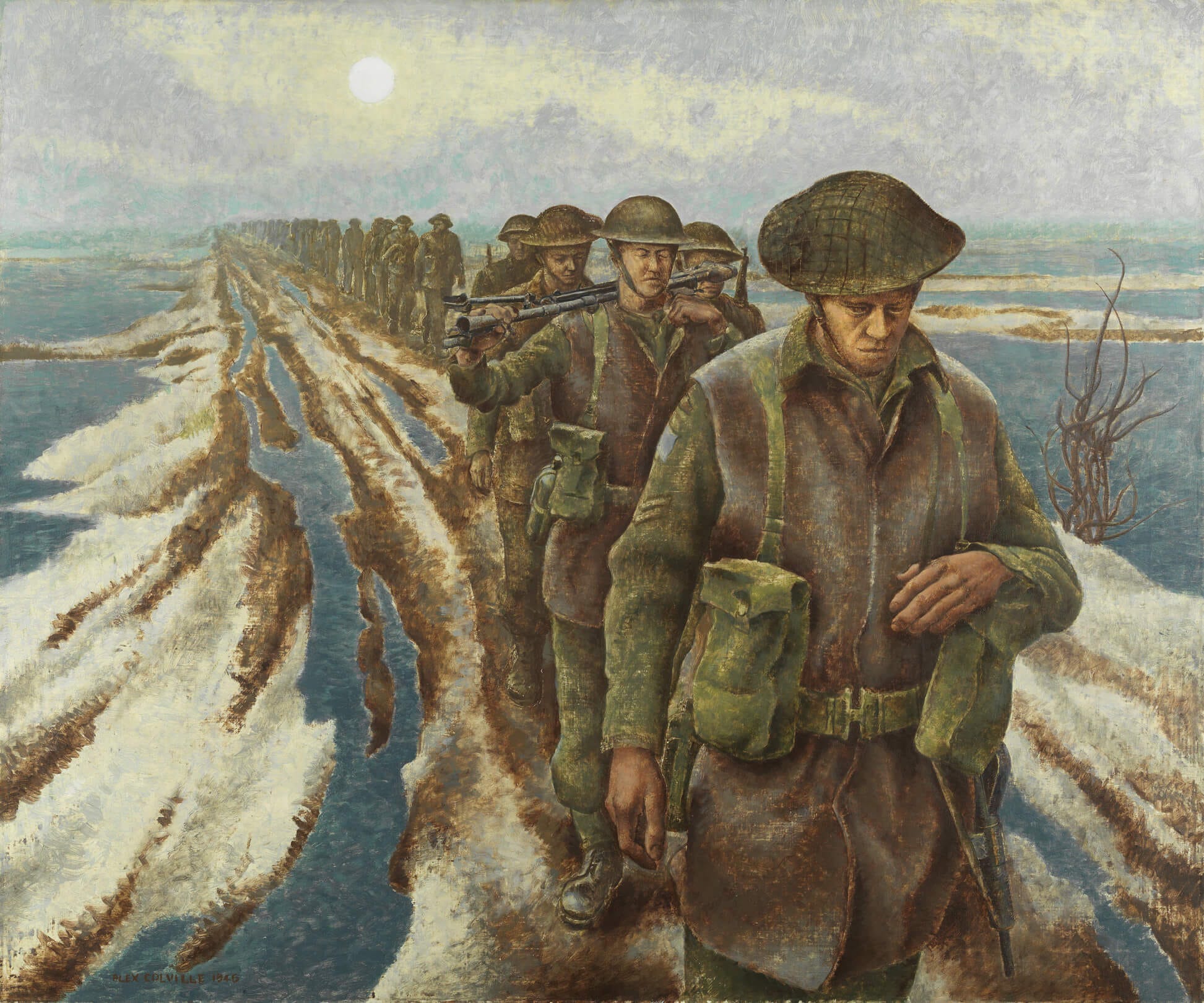
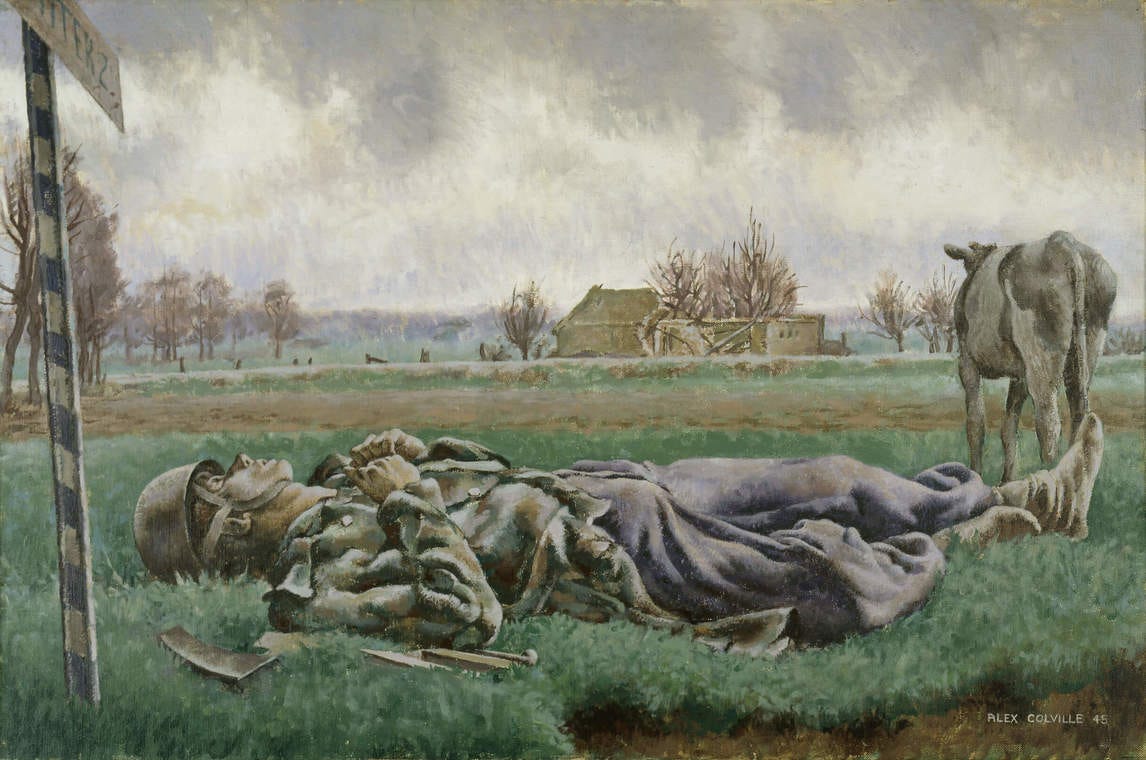
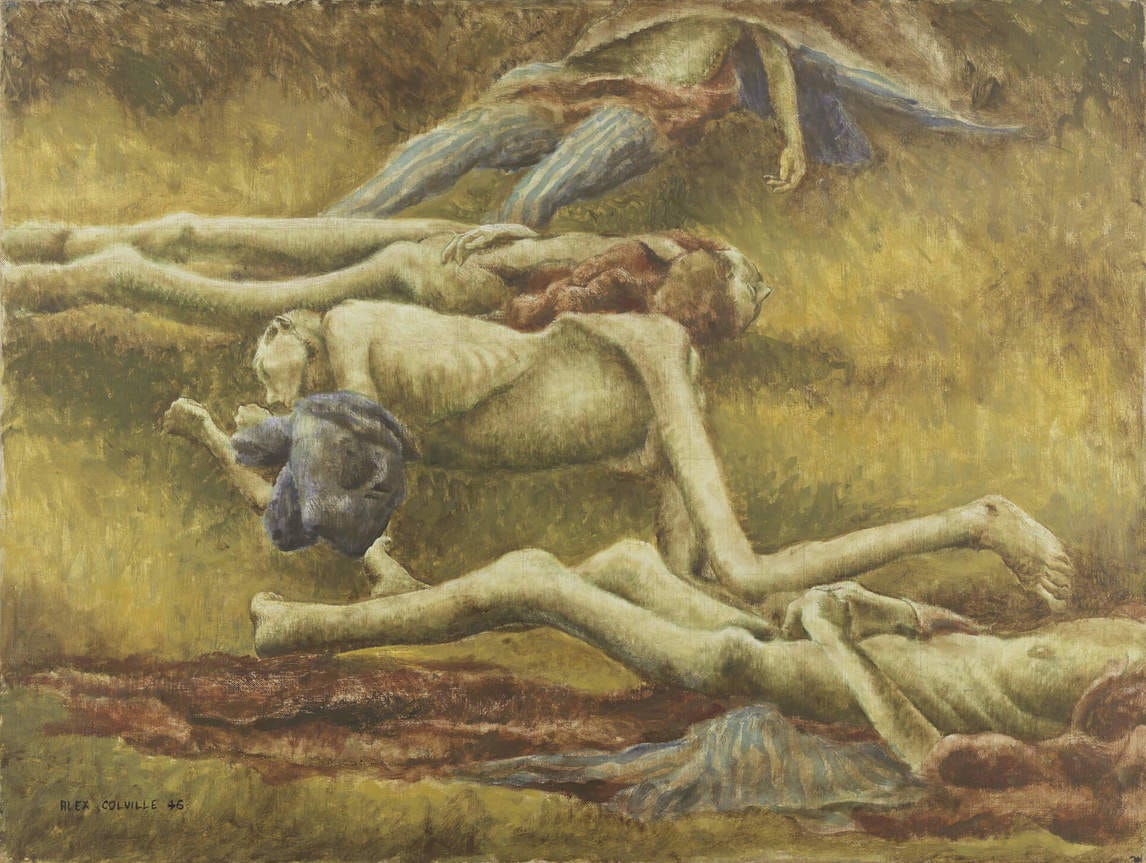
Contrary to most war painters, he also showed the most crude side of it, like in his controversial "Bodies in a grave"
We can see the influences in his style already in french painters like Cezanne and Seurat. People are always caught in the middle of an act, often relaxing or in some form of enjoyment, but the observer is always removed, never part of the scene. The subjetcs in the paintings rarely even look at the painter and often stare elsewhere or in the distance
One element that often returned on those paintings was the presence of a body of water and a clear sky that invoked a sense of serenity. In such representations, shadows are kept to a minimum and, especially in Seurat, smoothed out as much as possible, almost disappearing
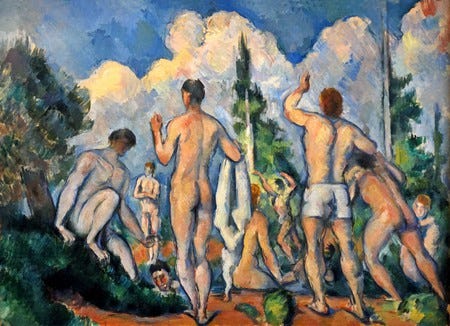
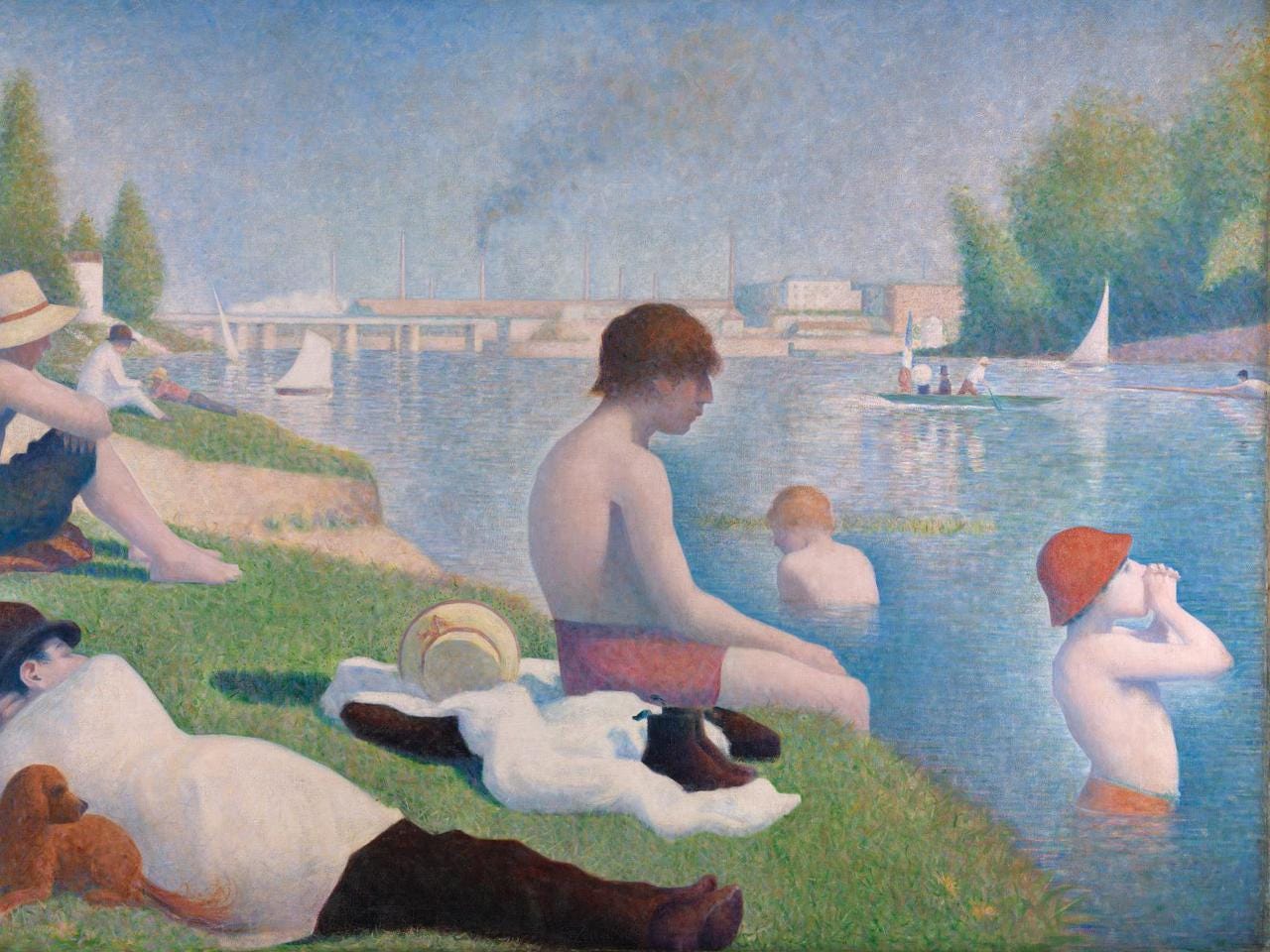
And this absence of shadows that brought Alex Colville’s painting to their distinct look. There is shading, there is a light source, but just like in an old 3D render engine, it's as if the objects do not interact with each other, do not obstruct light. Here the boat is flying or floating but we cannot tell for it has no shadow and creates no occlusion with the nearby body of water, almost as if they are a collage from different paintings

Throughout his career, the presence of a body of water and that serence azure feeling dominated to the point that his work was also named “Maritime realism”
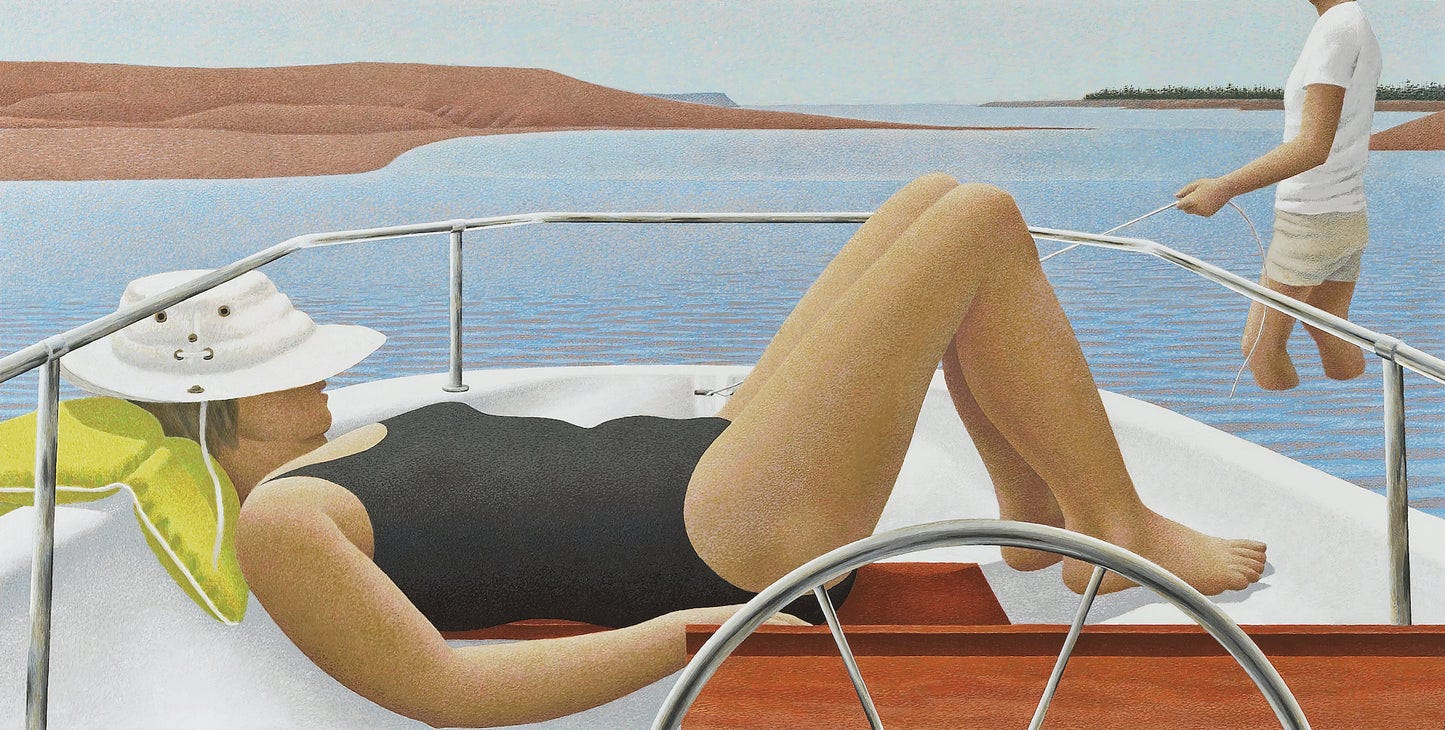
We can see the striking similarities with Seurat, but even when he diverged and placed the subjects facing the viewer
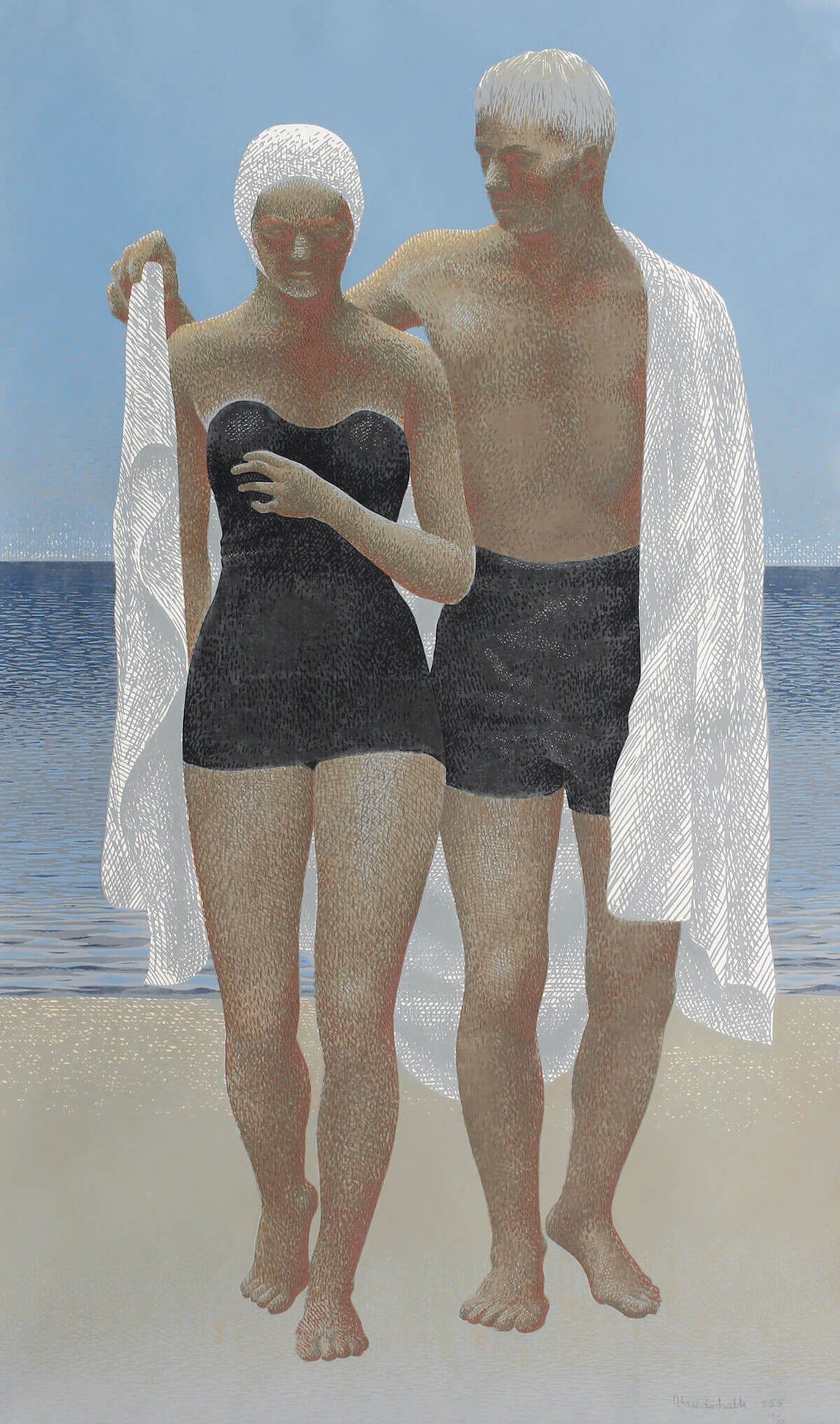
We still feel no more connected to them, no different from a stillframe of complete strangers.
The absence of clear shadows infuses the painting with a dreamlike aspect, which is fundamental in understanding their success and beauty.
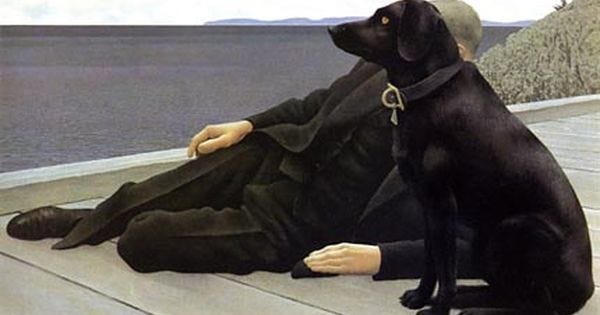
They feel like dreams, they almost look like dreams, but as opposed to Surrealism, that preferred unreal and absurd elements in the subject, here we have objective reality, simply a dog obstructing the face of a priest, from this POV. However it feels as elegiac (borrowing contemporary internet lingo) as any other empty swimming pool or shopping mall, feels like it’s not awakened reality. The reason has to do with the meaningful placement of the subjects, which is meaningful only because the observer can see the meaning, unconciously. It doesn’t matter whether the meaning can be articulated with words, what matters is that such a simple subject can induce, just by the form the painter has conveyed, an eerie sense of wonder, almost what we feel when we see an omen.
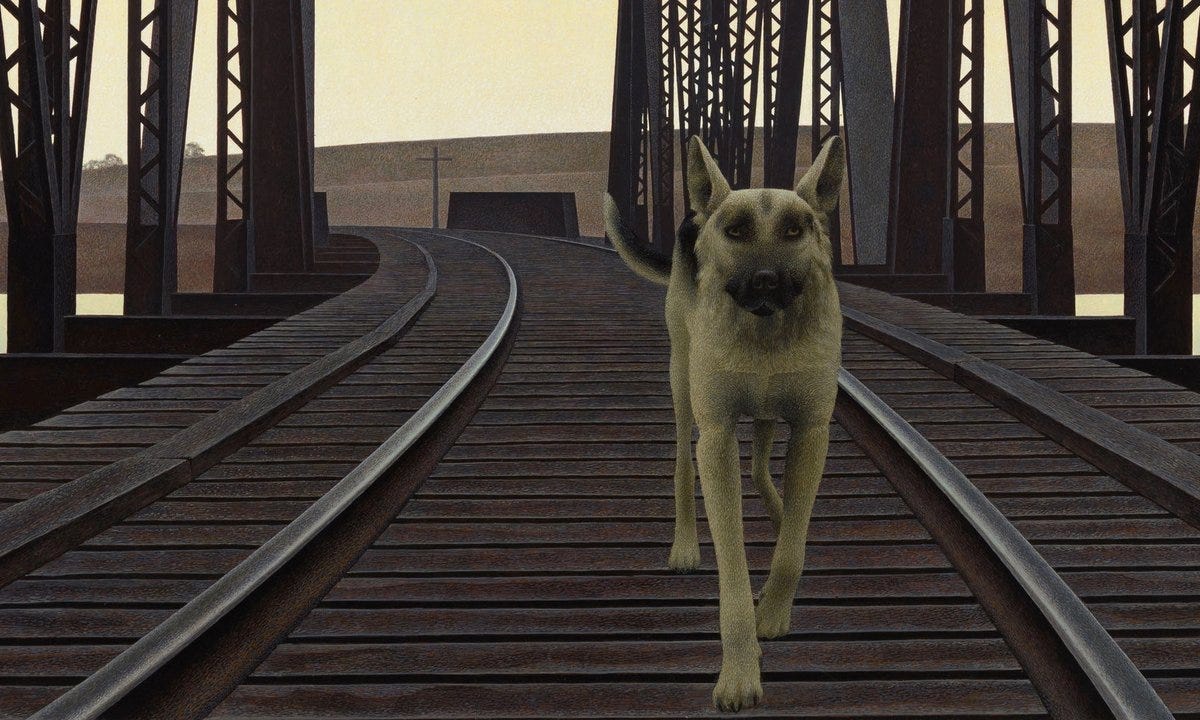
Our mind associated concepts to a dog and to a traintrack, but combine them together, although perfectly reasonable, it tickles our unconcious in the wrong way and being rendered in such an unusual way, it transports us into a new uncanney valley, that uncanney is not.
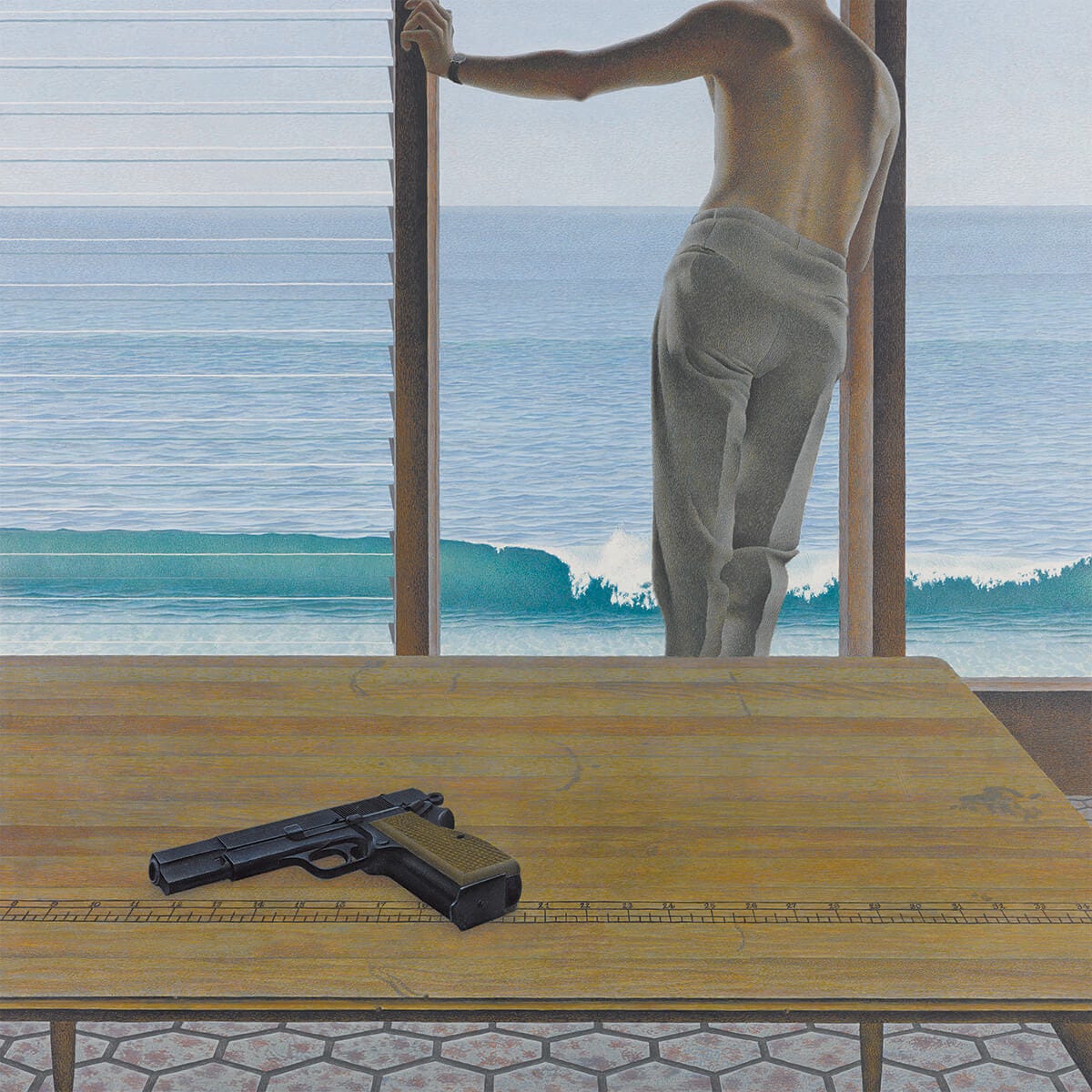
My favorite painting of his, Pacific, contains a strong element of storytelling that previous works of his were lacking. Here we do not have almost any information about the subject, however we know there is a story, we demand it. The architecture of the house, almost surreal like a Rene Magritte scene, seems to disappear completely into the ocean and leave just the only important elements: a separation from the ocean, an old lived table and a gun. The protagonist is anyone, and the moment of the story also doesn’t matter, whether the shooting is about to happen or whether it has happened. I often look at this painting and equate it to a shot from a non existing David Lynch move.
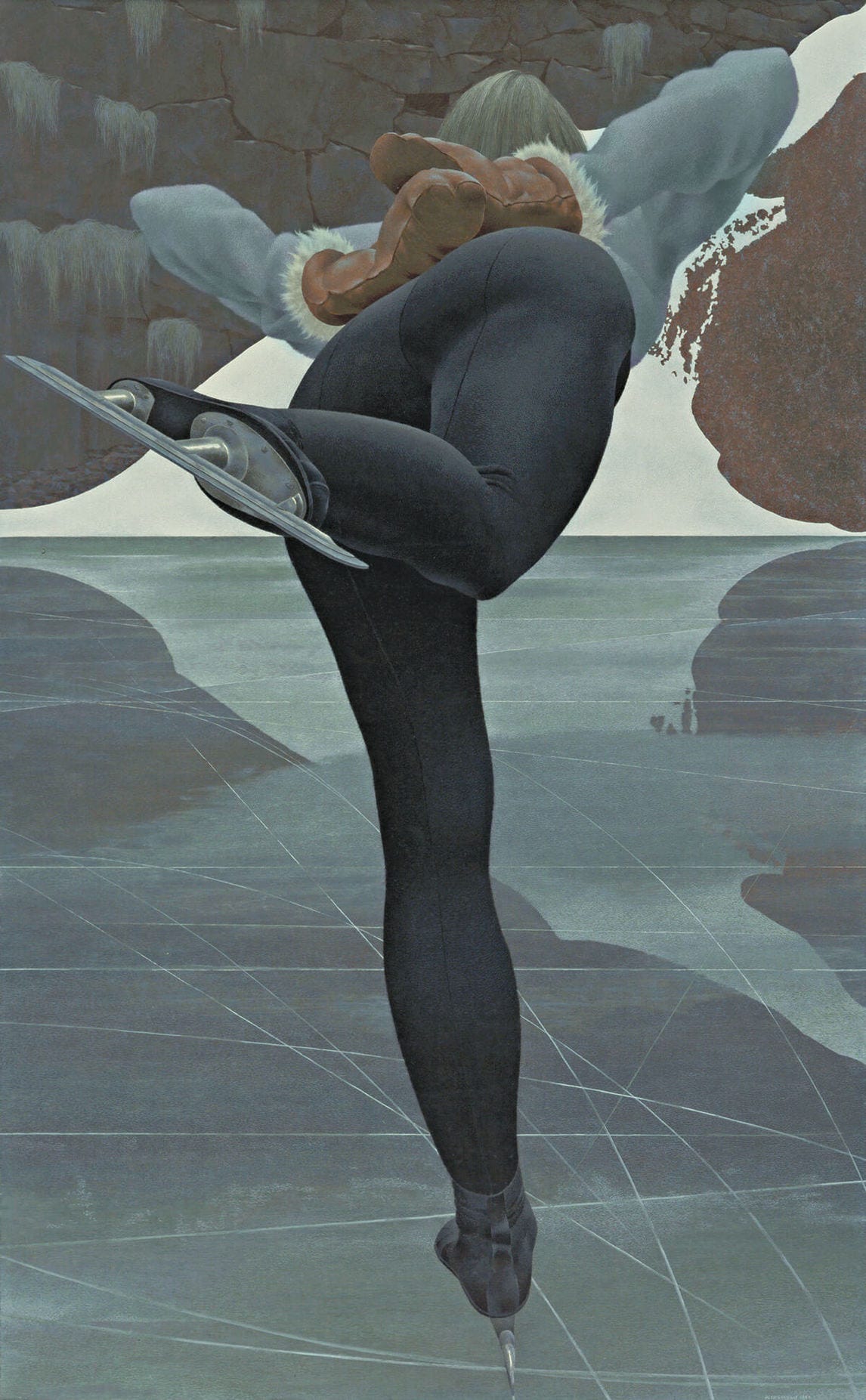
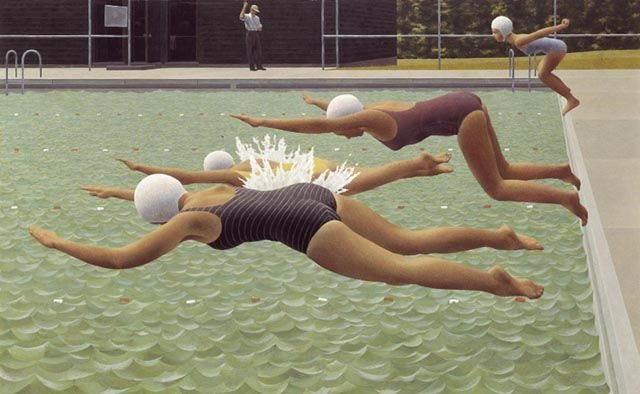
Even when subjects are shown in the middle of motion, there is absolutely no hint of movement, completely frozen in time, still and silent. And this feeling of silent is very reminiscent of another artist of his time, Edward Hopper
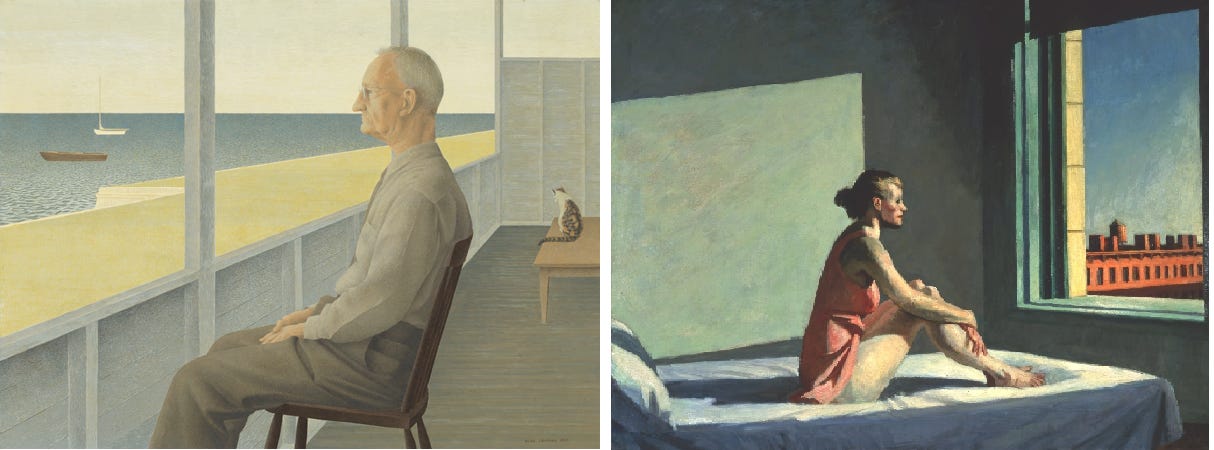
What is then the difference between them? I believe it all boils down to the feeling: Edward Hopper feels absolutely, gutwrenching real, we know these people are longing for something, they are suffering loneliness, whereas Colville’s lonelines feels peaceful, the loneliness of someone who is complete and accomplished, who looks at the ocean thinking of tomorrow and not the past, of someone who is in a dream
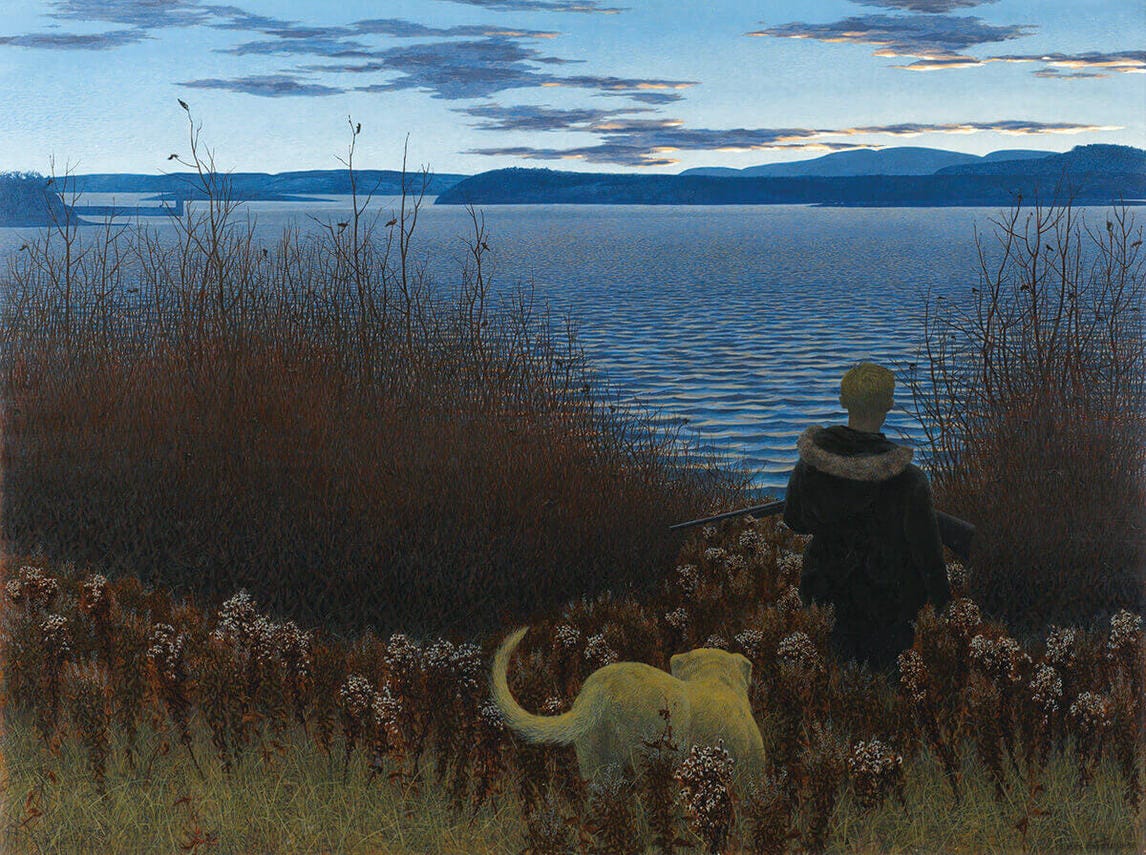
Regardless of the painting, Colville always feels optimistic, that horse in the beginning is going to reach the train before the train reaches him and it will run further to the horizon
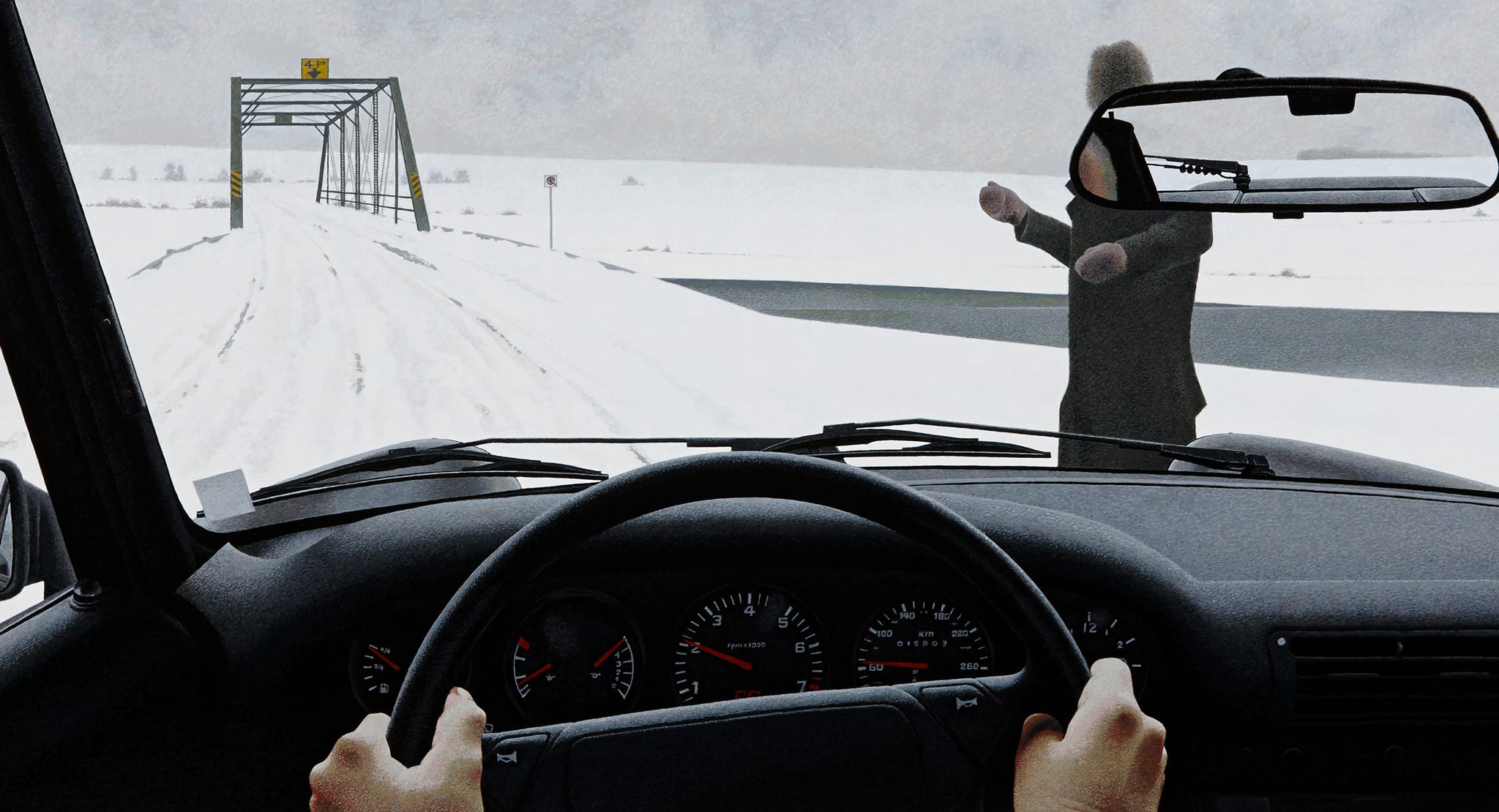
His career progressed further in the 90s until his death and we can see he always updated the content of the paintings, but never abandoned his distinctive style and overall feel
In conclusion I regard Alex Colville as one of the greatest artists of the second part of last century, a true unique vision and one of the few modern artists to actually realise it without compromising and without attempting to emulate anyone prior